
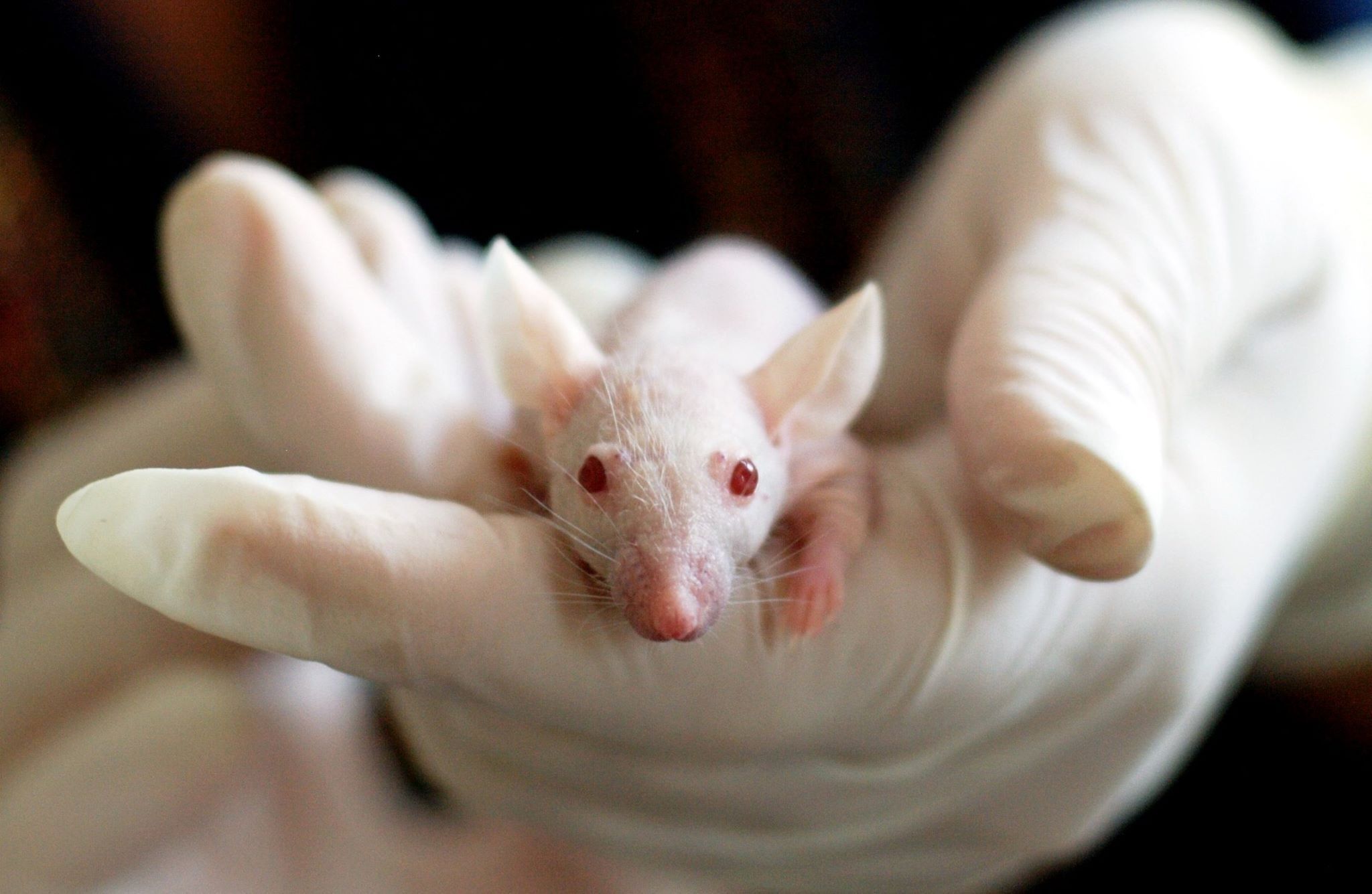
Many researchers who conduct animal experiments—as well as the authorities or individuals who support them—defend the practice with sweeping, dogmatic assertions. But asserting is not proving. If you wish to engage in a discussion with them, here is how to refute their “arguments.”
These two assertions are often presented together, as if the second necessarily followed from the first. Yet, while it is true that animal experimentation is a long-standing method, one cannot conclude from this that it has proven its worth or that it yields knowledge that is necessarily valid.
Animals—whether dead or alive—have been dissected since antiquity in the hope of understanding the anatomy and physiology of living beings, and of humans in particular. In the 19th century, Claude Bernard sought to transform this hitherto highly empirical practice into a science, writing works intended to demonstrate its value.
In the 21st century, we must finally acknowledge that this value is nil: animal experimentation could only yield knowledge useful for human health if it shed light on biological mechanisms shared by humans and animals. Such mechanisms do indeed exist. The problem, however, is that one can only know they are shared after observing them in both animals and humans. Studies conducted on animals (such as drug trials) cannot predict the human response. Modern proponents of animal experimentation seem to forget that Claude Bernard wrote, in his *Introduction to the Study of Experimental Medicine*: “It is quite certain that, for questions of immediate application to medical practice, experiments performed on humans are always the most conclusive.”
Thus, it was because ethical standards forbade conducting certain experiments on humans that Claude Bernard recommended using animals—not because studying the latter yielded the best scientific results.
On February 28, 2004, the *British Medical Journal* ran an article with the headline: “Where is the evidence that animal research benefits humans?” Finding few conclusive results, the authors recommended against conducting further studies on animals.
This statement is often used to imply that, because animal experimentation is legal, it is justified from both scientific and ethical standpoints.
It is true that the use of animals for scientific or educational purposes has been regulated in Europe since 1986. The regulation currently in force is “Directive 2010/63/EU of the European Parliament and of the Council of 22 September 2010 on the protection of animals used for scientific purposes.” It applies to the use of live vertebrate animals—including larval forms and mammalian fetuses—as well as cephalopods (such as octopuses) (Article 4).
Directive 2010/63/EU authorizes: basic research; applied research for the prophylaxis, diagnosis, or treatment of human or animal diseases; the assessment, detection, regulation, or modification of physiological conditions in humans or animals; the improvement of production conditions for animals reared for agricultural purposes; higher education; and so forth (Article 5).
From a scientific perspective, the Directive asserts that “the use of live animals remains necessary to protect human and animal health and the environment” (Recital 10). Yet, no evidence is provided to substantiate this claim. While an increasing number of scientists question the validity of animal experimentation as a means of obtaining data relevant to humans, the Directive sidesteps the debate.
From an ethical perspective, animal experimentation is often portrayed as a necessary evil. Discussion should therefore focus on what constitutes “necessity.” However, the list of authorized procedures (Article 5) opens the door to a wide range of uses. A clear limit is set by Recital 12: “The use of animals for scientific or educational purposes should therefore only be considered where a non-animal alternative method is unavailable.” Yet, given the existence of hundreds of educational and regulatory toxicology testing methods that do not involve animals—but are not made mandatory (see our dossier)—it is evident that the directive is not always enforced.
The legislator adopted the “3Rs” principle: “internationally established principles of replacement, reduction and refinement” (Recital 11). The aim is to *replace* animal experiments with “alternative methods,” to *reduce* the number of animals used by employing other experimental methods and strategies, and to *refine* experimental conditions and animal care. Although ethics committees are supposed to oversee the application of the 3Rs, they very rarely prohibit an animal experiment project (see Lie No. 4), as their review focuses on “animal welfare” rather than the relevance of the results to humans.
The number of animals used has indeed decreased compared to the 1970s and 1980s, but since the year 2000, the use of transgenic animals has steadily increased.
In 2020, the European Commission (EC) published its “statistics on the use of animals for scientific purposes.” According to this document, 11.5 million animals were used in 2011, whereas that figure reportedly fell to fewer than 10 million in 2017 across the 28 Member States.
Yes, but… In a separate document, the EC reports on the number of animals bred and killed but not used: animals that had reached the end of their reproductive life, sick animals, those used to create or maintain genetically modified lines, and even animals killed for their organs and tissues—”for example, for use in alternative methods”—since Directive 2010/63/EU covers animals used while alive, not those killed to conduct experiments on their tissues, organs, or cells. In total, these categories accounted for 12,597,816 animals in 2017—two million more than the animals on which experiments were actually performed.
France (along with the United Kingdom and Germany) is one of the European countries that uses the highest number of animals: just under two million animals used, and slightly over two million bred but not used.
In France, the national list of animal experimentation ethics committees comprises 86 entities in 2024 and 76 in 2025. This downward trend is due to the consolidation of various committees. Some are regional, while others belong to public or private research centers. The Rural Code and a national charter define the mission, structure, and functioning of these ethics committees. They evaluate every research project involving an animal model. A favorable decision is required to obtain authorization to carry out the project.
Animal experimentation ethics committees consist of at least five members, including:
a person with expertise in the design of projects or experimental procedures involving animals;
a person with expertise in the performance of experimental procedures involving animals;
a person with expertise in at least one of the following areas: animal care and the killing of animals;
a veterinarian;
a person with no specialized expertise in matters relating to the use of animals for scientific purposes.
The ethics committee is responsible for verifying that each project “is scientifically or educationally justified, or required by law.”
This raises objections. In basic research, an experiment aims to increase knowledge without the need to envisage any specific application for that knowledge. For example, one might study brain function without seeking to establish a link to a disease or understand a drug’s mechanism of action. However, given the unique characteristics of the human brain, what is the utility of research conducted on rats or even monkeys?
In some cases, to facilitate securing funding, a basic research project may be presented as having potential applications. On what scientific basis, then, can an ethics committee approve—for instance—research into breast cancer in women using mice? The very nature of an “animal model” is never debated. It is taken for granted that results obtained from animals can be extrapolated to humans, even though this is precisely a subject of scientific controversy.
Ultimately, ethics committees approve research projects based on “animal models” without verifying the validity of those models—a practice that is scientifically problematic—as well as basic research projects that sacrifice animals with no expected benefit to humans, which ought to raise ethical concerns.
Finally, it is worth noting that civil society representation on these ethics committees is merely token—if not non-existent—even though taxpayers fund a significant portion of this research.
Physiology is, in fact, a science that requires studying the organism as a whole. Our bodies are not merely a collection of cells; numerous substances (hormones, minerals, ions, etc.) circulate between cells to act on targets that may be far removed from their site of production, nerve signals travel to muscles and organs, and most functions are governed by regulatory loops (the target organ sends messages back to the organ that triggered the function—for instance, high blood sugar levels trigger insulin production by the pancreas).
Many diseases (diabetes, obesity, etc.) stem from a disruption of these regulatory loops; to cure them, we must understand the entire loop, not just the functioning of individual cell types.
It is indeed the whole organism that must be studied. However, if we aim to cure humans, the human organism must be the subject of that study.
An animal organism—possessing its own unique physiology and regulatory loops that do not necessarily involve the same elements as ours—will not necessarily yield insights applicable to humans.
The chimpanzee is the animal most similar to humans. Theoretically, therefore, it should be the best possible model. Yet viral diseases provide a clear example to the contrary: when infected with the AIDS virus, the chimpanzee remains unaffected; when infected with the hepatitis B virus, it may develop a mild form of hepatitis that does not progress to cirrhosis or liver cancer, as it can in humans; conversely, when infected with the Ebola virus, it dies of hemorrhagic fever, just as humans do. How can we hope to find a therapeutic solution for humans by studying an organism that behaves—unpredictably—sometimes like ours, sometimes differently, and sometimes in a completely opposite manner? On the one hand, we have so-called “animal models” that allow for the study of the whole organism but do not yield reliable results for humans. On the other hand, we have methods for examining the human body—its tissues and organs—as well as experimental techniques using isolated human cells; while these may not always reflect the reactions of the entire organism, the results they produce are reliable and relevant to the human species. Naturally, this is the approach that should prevail. It is worth adding that this field is benefiting from increasingly precise methods; for instance, organoids, organs-on-chips, and even “human-body-on-a-chip” systems make it possible to obtain results that closely mirror those observed in the whole organism.
For further details, please see our dossier.
The law requires that any drug candidate be tested on at least two mammalian species.
Yet, out of ten drug candidates successfully tested on animals, only one will ultimately be approved for human use. In 90% of cases, therefore, excessive toxicity or a lack of efficacy in humans goes undetected in the animal test subjects.
Reactions to the same chemical substance can vary significantly between species. This stands to reason for anyone familiar with biological discoveries from the latter half of the 20th century: an animal species possesses a unique set of genes, selected based on environmental constraints (including dietary substances, which vary greatly from species to species); these genes determine the biological properties of each individual within the species. It follows from these observations that each species has its own distinct biological properties and cannot, therefore, serve as a model for another species. The validity of this conclusion is confirmed by numerous observations: reactions to chemicals, susceptibility to viruses, and the diseases affecting humans and animals differ greatly. The law mandating animal testing dates back to the 1950s and fails to account for the evolution of scientific concepts and technologies that has occurred in recent decades.
Drug validation should be based solely on results obtained from humans.
The first step should be to assess toxicity using human cells in culture. Clearly, if a substance is toxic to our cells, it will also be toxic to the organism as a whole. Further steps can involve using “human-on-a-chip” technology, followed by microdosing on volunteers under the strict conditions of clinical trials. For more details, please see our dossier.
Testing drugs on animals leads to humans being given medications that may cause them harm. Conversely, it is likely that many potentially useful drugs are discarded simply because they are toxic to animals. Penicillin, for example, is lethal to guinea pigs.
People who use this argument seem to think that animal testing prevents human beings from being used as guinea pigs. They forget or are unaware that experimentation is also conducted on human beings. Clinical drug trials—which are just as mandatory as animal tests—are indeed forms of human experimentation.
Many of the discoveries that proponents of animal experimentation attribute to the practice are, in fact, largely the result of chance: something was found that was not being sought, during experiments designed for an entirely different purpose. A great number of these discoveries could have been made in other ways.
We now know that physiology differs significantly between species; why, then, should we waste time and resources trying to understand phenomena in animals—only to see if they hold true for humans—when we often have the means to study humans directly?
Those who believe that finding new therapies would be impossible without experimentation exaggerate the role it plays. The most significant therapeutic discoveries have come from clinical observation and epidemiology—methods that have made it possible to identify the causes of a disease and, consequently, prevent its onset. Cardiovascular disease was the leading cause of death in developed countries (though cancer is poised to take its place). Yet it was epidemiology that revealed the risk factors—such as high cholesterol, smoking, and a sedentary lifestyle—factors often linked to our way of life that do not affect animals.
We are dealing here with applied research—that is, experiments conducted to understand the causes, symptoms, and progression of a disease, as well as the underlying molecular mechanisms, with the aim of discovering a therapeutic molecule. Is it widely known that many of these experiments are not reproducible? In other words, the same experiment fails to yield the same results when performed by a different research team—or sometimes even by the original team itself! “In preclinical research […] estimates of irreproducibility […] range from 75% to 90%. These estimates align remarkably well with the 85% estimate for the proportion of biomedical research that is generally considered wasted” (C.G. Begley and J.P.A. Ioannidis, *Circ Res*, 2015, vol. 116, pp. 116-26). According to these leading experts in the field, approximately 85% of preclinical research—much of which involves animals—serves no useful purpose!
Major medical systems, some of which are very ancient, have never relied on animal experimentation. In English-speaking countries, these medical practices are widely accepted by the medical profession itself. A study published in the *Journal of the Royal Society of Medicine* in 1994 (vol. 87, pp. 523-25) indicated that 70% of hospital doctors and 93% of British general practitioners had, at least once, suggested that their patients consult a practitioner of unconventional medicine; 12% of hospital doctors and 20% of general practitioners themselves practiced one of the five disciplines studied: acupuncture, chiropractic, homeopathy, naturopathy, and osteopathy.
Also, take a look at André Ménache’s blogs.
Do we owe treatments for Parkinson’s disease to animal experimentation?
Do we owe several Nobel Prizes to animal experimentation?
Do we owe our medical care to animal experimentation?
Certainly, if we are interested in the species studied. Experiments on rats allow us to increase our knowledge about rats. However, not all of them have practical application. Should we then tolerate experiences and the pain they involve for the simple pleasure of knowledge that will benefit neither the health of the species studied nor human health?
Specialized publications are full of reports whose usefulness is hardly proven. For example, the Journal of Comparative Neurology, in 2002 (vol 449, pp 103 to 119), reported the sacrifice of 10 cats and 3 rats to study the innervation of their vibrissae (whiskers endowed with tactile properties). Since humans do not have vibrissae, it is clear that this experiment is not useful for us. We also don’t see what the applications in veterinary medicine might be.
Driven by the need to publish to boost their careers, many researchers duplicate experiments already done by changing a few details and presenting them as new. Others attempt to demonstrate on animals (often without success) phenomena that we already know from human epidemiological or clinical studies. They try to justify themselves by claiming to develop animal models on which it would be possible to test therapeutic approaches. This often leads us into dead ends as in the case of cancer: there are numerous so-called animal models, including transgenic animals, in which tumors do not evolve as in humans, some of which are cured following the administration of a drug which, when tested on humans, proves ineffective.
Prevention can only be done by studying humans since the symptoms artificially created in animals do not necessarily have the same cause as in us. The stated goal of finding new therapies is also not often achieved since drugs can have very different effects depending on the species.
Cancer illustrates this impasse well: most drugs tested on animals are ineffective for humans and, moreover, we know that at least 80% of cases of cancer are due to environmental pollution; this disease will continue to be the second (and increasingly, the first!) cause of death in developed countries as long as prevention (prohibiting the production of carcinogenic substances) is zero and research continues to be done on organisms that do not react like ours.
In the field of biology, students are often required to perform animal experiments, even though they will not be called upon to do so in their future careers. For instance, frog or rat dissections are common during the early years of university study. Yet, there are numerous plastic models, interactive computer programs, and videos available for learning anatomy. International conferences are regularly held to showcase the many educational methods that replace animal experimentation—often offering significant advantages. More details here.
Regarding surgery, prominent surgeons have stated that training on animals actually hindered their acquisition of surgical techniques. Indeed, fine anatomical details and tissue resistance vary greatly between species. The best way to learn surgery—following extensive training on simulators and mannequins—is to observe experienced surgeons and subsequently perform operations under their supervision.
In Galileo’s time, most people who claimed to be learned believed the Earth was flat. A majority has never been a guarantee of truth. Furthermore, it remains to be seen whether researchers and doctors who defend animal testing actually constitute a majority.
Many researchers resort to animal testing for the wrong reasons. Mice—the most commonly used animals—are inexpensive to feed and house; they have short lifespans, allowing for the study of multiple generations; they are prolific, enabling the study of large families; and they are not particularly well-liked by the public, which helps avoid the emotional reactions often triggered by the use of dogs, cats, or monkeys. Consequently, it is far easier, faster, and cheaper to design a study using mice than one involving human surgical waste destined for incineration or epidemiological studies. Yet, researchers are periodically evaluated based on the number of their publications—sadly, more so than on the actual value of those publications.
Moreover, it is easy to design an animal experiment to yield a desired result. For instance, to demonstrate the toxicity (or lack thereof) of a chemical substance, one need only select a strain of mice that is either more or less susceptible to the substance’s toxic effects (such as carcinogenicity or endocrine disruption). Animal testing is thus heavily supported by lobbies more concerned with corporate stock prices than with human health. The press itself is partly under the influence of these lobbies.
However, it would be a mistake to believe that opposition to animal testing is found only within animal welfare organizations. Scientific opposition to animal testing is gaining ground and beginning to make itself heard. Researchers have established organizations such as Antidote Europe in France, Doctors Against Animal Experiments in Germany, Safer Medicines in England, the Physicians Committee for Responsible Medicine (PCRM) in the United States, and many others. All of these groups oppose animal experimentation and are capable of presenting scientific arguments demonstrating not only the practice’s futility but—worse still—the danger it poses to human health by treating results valid only for the species under study as universally applicable.
A survey commissioned by Safer Medicines in the United Kingdom revealed that 82% of general practitioners believe animal experimentation can be misleading, and 83% call for an independent assessment of the relevance of animal experimentation.